
Science Communication: The Manhattan Project of the 21st Century
Talks with Professor Brandon Ogbunu from Yale University and UK Science Writer Philip Ball.
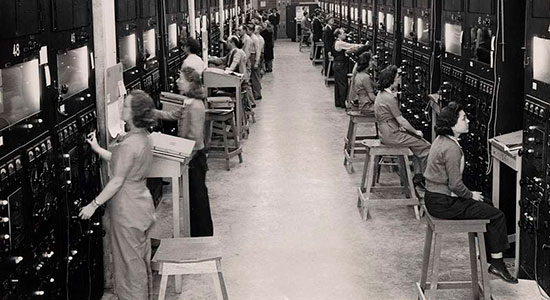
Global challenges – from climate change to public health crises – depend not only on scientific knowledge, but on how that knowledge is communicated, understood, and debated. This requires coordinated, ambitious, and ethically reflective scientific communication efforts not dissimilar to those of The Manhattan Project, the large‑scale US-led research effort during World War II that developed the first nuclear weapons. In this public lecture, we explore science communication as a central component of scientific practice and as a key interface between research and society.
Bringing together perspectives from science and science writing, the event examines how communication shapes the production, interpretation, and impact of knowledge. It asks what role individual researchers play in communicating their work, and how broader forms of mediation can foster more open, informed, and pluralistic public dialogue.
The event features two keynote talks followed by commentary and discussion.
Each lecture will be followed by short responses from representatives of HUM:Global and UCPH Forward/Society of Fellows, and the session will conclude with an extended audience Q&A.
Speakers
Brandon Ogbunu (Yale University) reflects on the role of the individual scholar as communicator, arguing that explaining, justifying, and defending knowledge is as essential to science as producing it.
Brandon Ogbunu is a computational biologist whose research investigates complex problems in epidemiology, evolutionary & population genetics, and evolution. His work utilizes a range of methods, from experimental evolution, to biochemistry, applied mathematics, and evolutionary computation. Ogbunu is also a professor at the Santa Fe Institute, and the author of Undark's Selective Pressure column.
Recent publication: Science, Society, and Culture: Brandon Ogbunu’s Case for a More Creative Scientific Enterprise.
Philip Ball (science writer) explores the role of mediators as “honest brokers” who navigate between disciplines and perspectives, helping to broaden and deepen public conversations about science.
Philip Ball is the author of many popular books on science, including works on the nature of water, pattern formation in the natural world, colour in art, the science of social and political philosophy, the cognition of music, and physics in Nazi Germany. He has written widely on the interactions between art and science and has delivered lectures to scientific and general audiences at venues ranging from the Victoria and Albert Museum (London) to the NASA Ames Research Center, London’s National Theatre and the London School of Economics. His writings on science for the popular press have covered topical issues ranging from cosmology to the future of molecular biology.
Programme
| 13:15 – 13:20 | Arrival |
| 13:20 – 13:30 | Introduction by Professor Helle Porsdam, UCPH Senior Forum |
| 13:30 – 14:00 |
Lecture and commentary with Associate Professor Brandon Ogbunu: “’Storytelling’ in science: Perils and possibilities” |
| 14:00 – 14:30 | Lecture and commentary with Science Writer Philip Ball: “Does science need critics? The importance of providing critical evaluation and context” |
| 14:30 – 15:00 | Audience Q&A |
| 15:00 – 16:00 | Reception |
Host
Helle Porsdam (UCPH)
Commentators
- Kamilla Kraft, Department of English, German and Romance Studies
- Anke Ninija Karabanov, Department of Nutrition, Exercise and Sports
Registration
The event is open to the public.
Registration is required. Registration is closed as of 25 September 11 AM.