
HUM:Global Seed Money
HUM:Global Seed Money offers grants of between DKK 3,000 and DKK 35,000 for activities carried out by students and researchers at the Faculty of Humanities at the University of Copenhagen. Activities should fall under the categories of public engagement, stakeholder engagement, policy work, research, or teaching. Projects could take the form of guest lectures, workshops, symposiums, or seminars in connection with writing applications for external funding. As a student, you may wish to organize a series of meetings or invite a guest speaker to kick-start a new initiative, network or small conference.
Though not a requirement, we encourage proposals that involve diverse local and international global institutions and non-academic actors, and/or partners that operate across disciplinary and institutional boundaries at the Faculty of Humanities.
We warmly welcome innovative ideas and proposals from NorS, EnGeRom, ToRS, KOMM, IKK and Saxo researchers and students. If you have an idea that adheres to the Seed Money Guidelines, send us your application.
Read the 2026 call and guidelines.
2026
In 2026, the PPG assessed the applications at a meeting on 18 May 2026 and awarded a further 99 850 DKK to three projects by Katherine MacKinnock, Martyn Bone and Kamilla Kraft who is partnering with Nuranindia Endah Arum. Read about the projects below.
Language and Work Relations in the Context of Migration: Bridging and Reimagining
Kamilla Kraft, Associate Professor
Nuranindia Endah Arum, Postdoc
Department of English German and Romance Studies
Two-day interdisciplinary workshop examining the intersections of language, work, and migration from critical and applied perspectives
The workshop focuses on a tension between global and local logics that becomes particularly salient through the lens of language and labor migration: While the global economy depends on work migration, producing international and multilingual workplaces, these workplaces are often governed by dominant expectations to use the local – typically national – language(s). Access to employment, integration, job opportunities, participation and workplace communication are frequently framed as dependent on learning the local language(s), resulting in the individual worker having to be reshaped to fit into the local rather than the workplace being reshaped into the global (Arum, 2024). This tension is a central part of the unequal paths for ‘local’ and ‘migrant’ workers. The workshop aims to foster dialogue and action across critical and applied approaches by bringing together knowledge and experience from multiple disciplines and stakeholders.
Afterlives of the Plantation(ocene): U.S. South, Global South, Global North
Martyn Bone, Associate Professor
Department of English German and Romance Studies
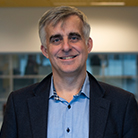 International symposium generating valuable new understandings of the Plantationocene as a global-scale alternative to the Anthropocene.
The “Afterlives of the Plantion(ocene)” project will focus on a two-day symposium in the spring 2027 semester. This symposium will bring together experts across humanities disciplines to explore how going “South to the Plantationocene” involves scaling up from the U.S. South to the Global South to “build upon present understandings of the Plantationocene and its long-term, planetary effects” (Aikens et al.). Symposium participants will also consider the afterlives of plantation slavery in the Global North, not least Denmark’s fraught relationship with plantation slavery (especially in Danmark’s former Caribbean colonies, now the U.S. Virgin Islands).
DEEP ARCHIVES AS A RESPONSE TO GLOBAL POLYCRISIS environment, geopolitics, data economies and AI
Katherine Clare MacKinnock, Assistant Professor
Department of Arts and Cultural Studies
A symposium which will bring together researchers, students, and key stakeholders from public institutions and private industry working on issues related to long term data storage.
The exponential growth of AI‑driven data is intensifying pressure on global storage systems, creating an emerging “storage crisis.” Material shortages, high energy demands, and fragile supply chains make storage a key site where resource scarcity, infrastructural sovereignty, and long‑term knowledge survival converge. DEEP ARCHIVES is a research agenda examining how storage infrastructures are being reshaped by environmental instability, geopolitical fragmentation, and expanding AI economies. The symposium brings together researchers, students, and stakeholders to address storage as a cultural, political, and epistemological problem, offering a cross‑disciplinary platform for rethinking storage technologies amid climate and geopolitical crises.
2025
2025
In 2025, the PPG assessed the applications at a meeting on 10 June 2025 and awarded a further 70 000 DKK to four projects by Mikkel Vad, Sabrina Ebersmeyer, Beate Skakkebæk Lindegaard and Mikhail Suslov who is partnering with Sang Pil Jin. Read about the projects below.
Denmark and Global Music Histories: Research and Educational Outreach
Mikkel Vad, Assistant Professor of Musicology
Department of Art and Cultural Studies (IKK)
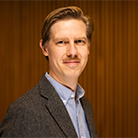 Virtual Exhibition and Symposium
This project aims to integrate Danish music scholarship into the global historical musicology discourse. The project seeks to uncover the overlooked narratives of Danish colonialism, orientalism, and racism within music scholarship. The initiative will foster connections between the University of Copenhagen and both educational stakeholders and international scholars of global music history. Activities include creating a virtual exhibit of Danish sources on global music culture and hosting a symposium on Northern European music's role in colonialism and cultural exchange.
New Histories of Ideas
Beate Skakkebæk Lindegaard, MA student in Comparative Literature
Department of Arts and Cultural Studies (IKK)
 Lecture Series
In the movie “Storytelling for Earthly Survival”, posthumanist theorist Donna Haraway argues for the necessity of new narratives in the face of planetary crisis. In order to imagine change, we need to change the stories we tell. In this understanding, theory and narrative are not just icing on the cake of society, but rather a central part of the infrastructure of all earthly life. Using this dogma as a seed of inspiration or a theoretical starting point, the lecture series “New Histories of Ideas” aims to broaden our knowledge of historical individuals (or collectives) who have gone against the grain of their own time and presented cutting-edge ideas, but who don’t figure in our canonical history of philosophy because of either the medium through which they communicated their ideas or due to their position in society or identity-markers.
Supporting senior researcher: Associate Professor Mikkel Krause Frantzen
Global Civilizationism: How Illiberal Regimes Teach Each Other
Mikhail Suslov, Associate Professor in Russian Studies and Sang Pil Jin, Assistant Professor
Department of Cross Cultural and Regional Studies (ToRS)
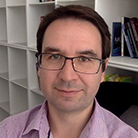 International Workshop
The rise of authoritarian populism and the decline of the US-led liberal world order, based on rules, have been examined by the burgeoning field of illiberalism studies. At the time of writing, the tendency has gathered momentum so fast, that it requires new conceptual tools to grasp the dynamic of horizontal expansion and universalization of the illiberal messages. What has been assumed before – that illiberalism is a situational and local reaction to exogenous factors of globalization (e.g. Berezin 2009, 10-11; Zuguete 2021) – is no longer holding water. The sheer size of the “elephant in the room”, which this research tackles, requires new assessment criteria. We shall hold an international workshop with nine speakers, including six invited researchers. The proposed outcomes of this workshop will be either a special issue of the journal (e.g. Journal of World History) or an edited volume (Brill or Palgrave Macmillan). We will also discuss the possibility of making a grant application in 2026 (e.g. DFF2) on the topic of the seminar.
Towards an Understanding of Global Feminist Enlightenments
Sabrina Ebbersmeyer, Professor of Philosophy
Department of Communication
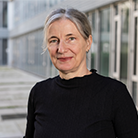 International workshops and seminar
The project aims at developing a more inclusive and comprehensive notion of enlightenment in the plural that acknowledges the thought, values and perspectives of women from across the globe. By connecting researchers from Europe, Asia, South America, and Africa, the project aims at developing a concept of global feminist enlightenments. Towards an Understanding of Global Feminist Enlightenments targets a yet uncharted territory. It requires a critical rethinking of the historical categories we use, as well as of analytical tools and methods. The project contributes to reframing and transforming enlightenment studies in a more inclusive way and to establishing a new research field.
2024
In 2024, the PPG assessed the applications at a meeting on 3 June 2024 and awarded 70 000 DKK to four projects by Rasmus Christensen, Dendup Chopel, Zachary Whyte and Barbara Wall who is partnering with Bo Ærenlund Sørensen and Jens Seirup. Read about the projects below.
Towards a trans-national history of the Caribbean
Rasmus Christensen, PhD fellow
The Saxo Institute
 An international graduate seminar centring on Caribbean history in the spring of 2025.
Currently, most European scholars working on Caribbean history find themselves somewhat isolated from each other, from those based in the Caribbean, and from the leading node of Caribbean historical research in North America. The motivation behind the seminar is to bring together a group of young and senior scholars from different countries and universities to lay the foundation for a stronger future collaboration on and exchange of Caribbean historical research across national and institutional boundaries.
Building buddhist worlds. Spiritual influence in creating sustainable urban infrastructures in Asia
Dendup Chophel, Postdoc
Department of Cross Cultural and Regional Studies (ToRS)
 A project development and writing-workshop to prepare a grant application for a major interdisciplinary and international research project.
Tremendous urban infrastructure aspirations and needs face Asia, the most populous continent. Yet it is also limited by its vulnerable socio-climatic conditions. The funding will enable an interdisciplinary and international consortium of scholars and partners from the government, industry and community to come together to imagine and co-create visions, policies and scholarships for sustainable urban futures. It will focus primarily on a new international Buddhist city being developed in Bhutan.
Mapping the nation: exploring spatial palimpsests in Asia
Barbara Wall, Associate Professor
Department of Cross Cultural and Regional Studies
 The aim of the project is to produce maps of Asia that counter essentialist attempts to reduce the largest continent of the world to the exotic “East”. We set out to find new ways to map Asia that break with the orientalist matrix of power. In the fall semester students will focus on hands-on skills exploring places in Copenhagen related to Asia (esp. China, India, Japan, Korea) and creating GIS maps of Copenhagen based on their findings. In the spring semester students will apply their practical skills and merge them with the theoretical concept of spatial palimpsests.
Collaborators: Jens Seirup, Bo Ærenlund Sørensen
Mapping as method: a global approach
Zachary Whyte, Associate Professor
The Saxo Institute
 A public lecture and two workshops that will highlight the value and uses of mapping.
While citing arts-based and participatory research has become a common feature of emerging literature in the humanities, how many academics have the knowledge or experience to engage with these methods? As part of a global approach to reduce inequalities in academic research and increase its transformative potential, we at the Centre for Advanced Migration Studies (AMIS) shall hold a full-day public event to explore Mapping as Method.