
The Gen_G Phenomenon: New Generations / Old Rules
 Why the real generational gap in the global film industry may not be only about age
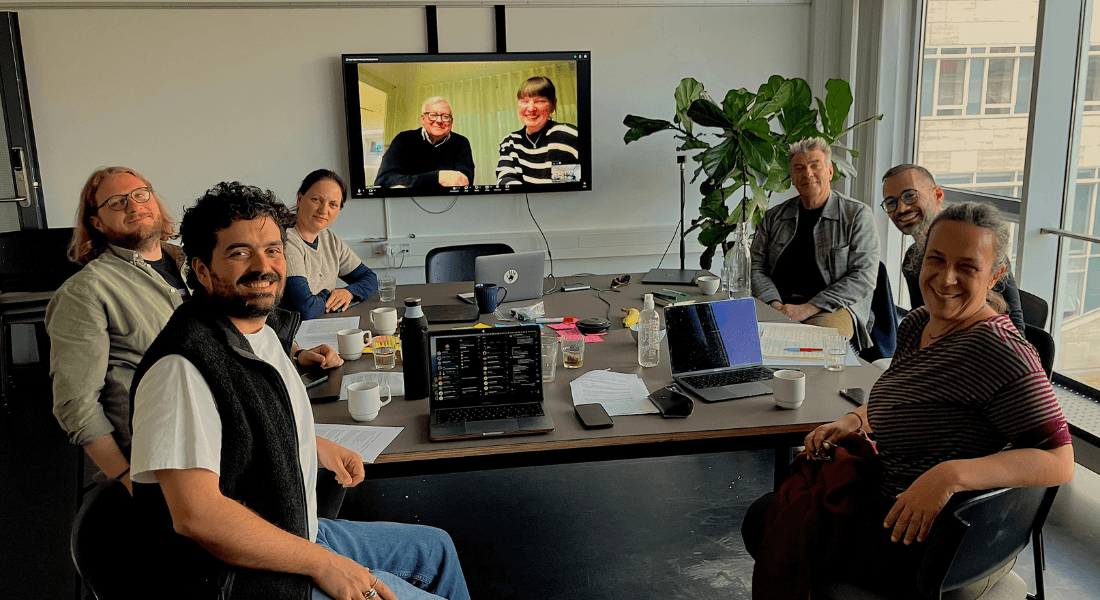
Who is able to build a sustainable career in the film industry nowadays and who is pushed out or held back, and under what structural, economic, and policy conditions? This question guided a three-day structured industry workshop at the University of Copenhagen on April 14–16 as a part of one of HUM:Global’s Flagship Initiatives. The workshop discussion built on initial cross-country data mapping by the European Producers Club.
The workshop was organised by Petar Mitric (University of Copenhagen), in collaboration with Alessandro Ammato (producer and representative of the European Producers Club), Ivana Kostovska (Brussel-based media researcher), as well as Damiano Garofalo and Federica D’Urso (Sapienza University of Rome). It also included multiple guest contributors from the film industry who have already addressed the generational gap through their initiatives and were therefore able to share first-hand, practical insights.
The workshop conclusions suggest that what is often described as a “generational gap” (Gen_G) in the film industry is not only about age, but also about the structural conditions under which careers are sustained over time. Audiovisual policy has placed strong emphasis on talent development, while less attention has been paid to long-term career continuity. At the same time, access to funding, networks, and decision-making structures often remains tied to established positions, reinforcing existing hierarchies.
A key focus of the discussions was the structurally fragile “mid-career” stage, sometimes described as the “missing middle.” During this period, many professionals struggle to consolidate their position, access resources independently, or continue working beyond the initial support schemes. Across contexts, recurring patterns emerged: access to funding is frequently linked to established structures; a limited number of networks shape opportunities; and gatekeeping power remains concentrated and increasingly risk-averse.
These dynamics intersect with broader inequalities related to class, social background, and mobility. Not all professionals have equal access to training, financial stability, or the capacity to sustain prolonged periods of uncertainty. As a result, career progression depends not only on talent or experience, but also on navigating systems that are unevenly accessible.
The workshop marks the starting point of a broader research agenda. The next phase will focus on mapping career trajectories across Europe, with particular attention to the “missing middle” and patterns of progression, stagnation, and exit. It will also examine how funding systems, professional networks, and decision-making structures shape access to long-term career sustainability.
At the same time, the initiative will continue to engage with industry organisations, policymakers, and audiovisual professionals to test these insights across different national contexts. By connecting research with practice, the project aims to contribute to a more inclusive, sustainable, and competitive European and global film & television industry.